


News
New GONOW Move Freely Live Fully
New GONOW Move Freely Live Fully
Before the first campfire is lit, every RV journey begins with a question: which vehicle is right for me? Walk into any dealership or browse an RV forum, and you will quickly encounter a maze of letters, numbers, and brand names that can feel overwhelming. Class A, Class C, Fifth Wheel, Super C — what does it all mean?
Every RV ever made falls into one of these two groups, and understanding this split is the single most important step in your buying journey.
| Motorized | The vehicle and living quarters are combined into one unit. You drive it. No separate tow vehicle needed. Examples: Class A, B, B+, C, and Super C. |
| Towable | The living quarters are a separate trailer pulled by a truck, SUV, or car. You need a compatible tow vehicle. Examples: Travel Trailer, Fifth Wheel, Truck Camper, Pop-Up Camper. |
The core trade-off is elegantly simple: motorized RVs mean you can arrive, park, and immediately be 'home' — no unhitching required. Towable RVs, however, allow you to unhook at your campsite and use your truck or SUV to freely explore the surrounding area without moving your entire living space.
Motorized RVs are self-contained units where the engine, cab, and living quarters are all part of the same vehicle. They are further divided by chassis type and size into distinct 'Classes.'
Class A motorhomes are the largest and most recognizable RVs on the highway. Built on heavy-duty bus or commercial truck chassis, they resemble a coach or bus from the outside, with a flat front and expansive windows.
Class A rigs offer the most interior living space of any motorized RV. Slide-out rooms, full-size refrigerators, washer/dryer combos, residential bathrooms, and king-size beds are all standard features at the higher end. Some luxury models rival the amenities of a small apartment.
Ideal user: Retirees or full-timers who plan to live on the road for extended periods, couples who want the most space and comfort, and travelers who value premium amenities over budget.
Trade-off: Fuel costs are significant, and maneuvering a 40-foot vehicle in urban areas or tight campgrounds requires practice. Parking at grocery stores and restaurants can be a logistical challenge.
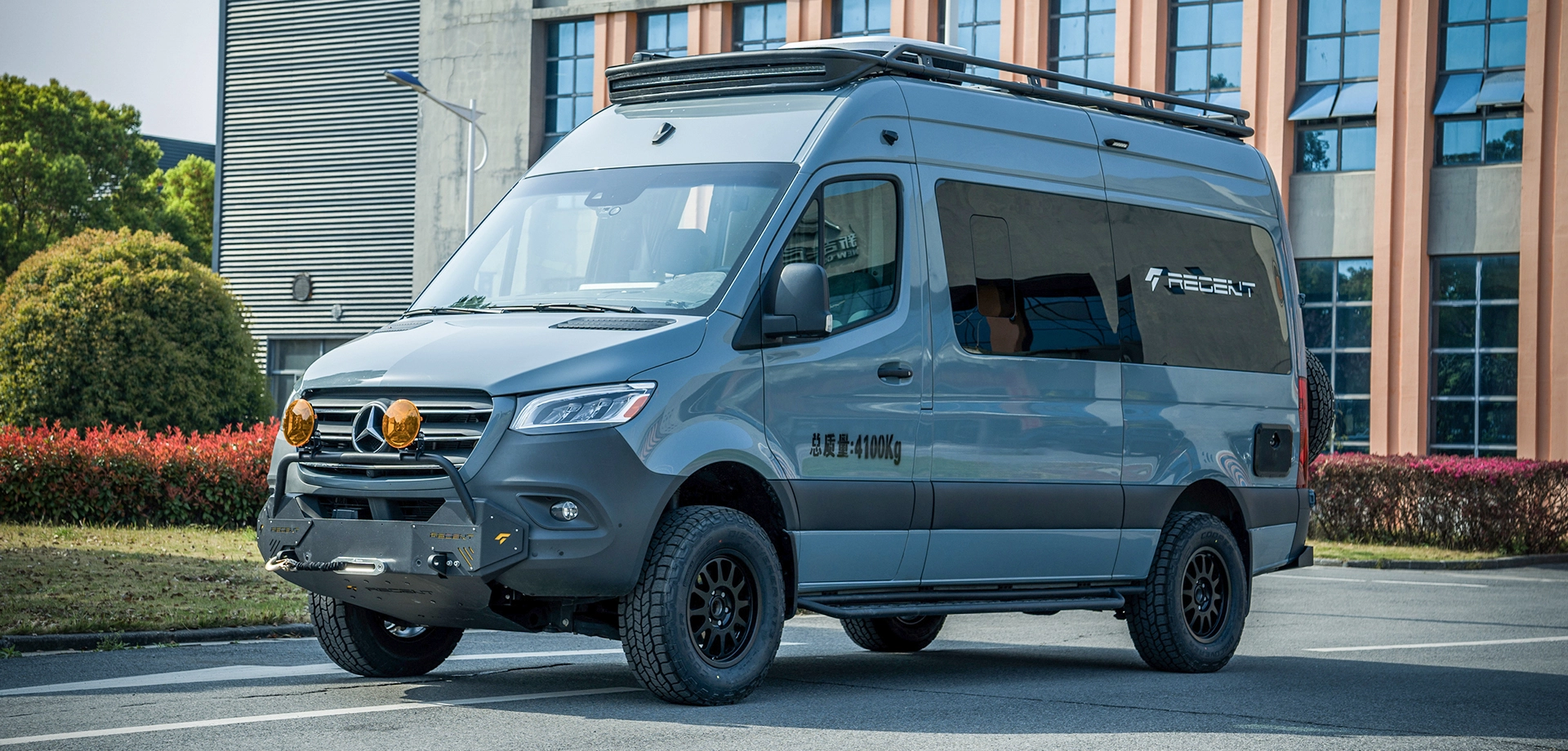
New Gonow RS8
Class B motorhomes, often called camper vans, are built on a standard cargo van chassis — typically from Ford, Mercedes-Benz, Ram, or Volkswagen — with a raised roof and customized interior. They are the smallest motorized RVs.
Despite their compact size, modern Class B vans are masterpieces of space efficiency. Pop-up roofs, convertible dinettes, compact kitchenettes, and wet baths can all be packed into a vehicle you can park in a standard city parking spot.
Ideal user: Solo travelers, couples, remote workers (the 'van life' movement), and anyone who wants to blend urban driving with weekend getaways. Class B vans can park overnight in neighborhoods without drawing attention — a feature known in the community as 'stealth camping.'
Trade-off: Space is genuinely limited. Standing room and storage are at a premium, making them less suitable for families or longer trips where you need room to spread out.
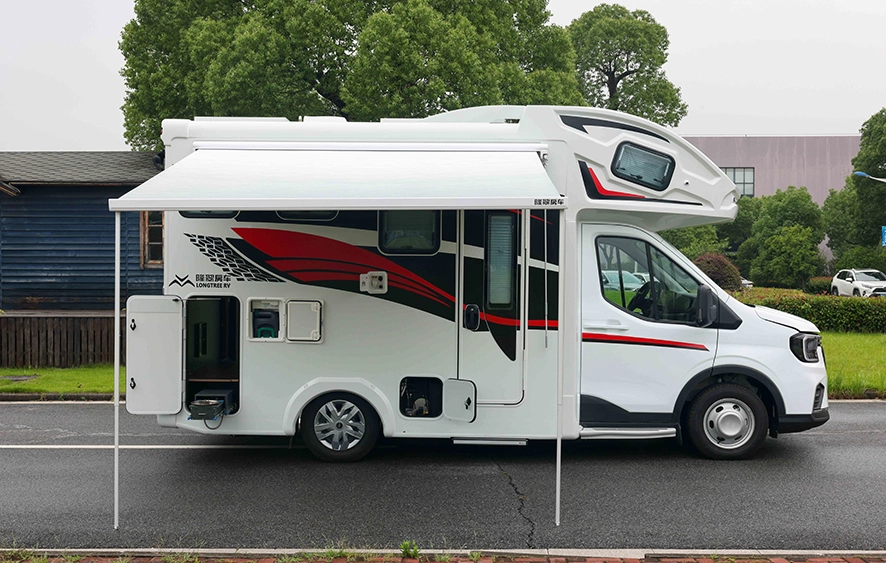
Longtree Motorhome
Class C motorhomes are arguably the most popular choice for first-time RV buyers. Built on a cutaway truck chassis (typically a Ford E-Series or Ram 3500), they are easily identified by the cab-over bunk that extends above the driver and passenger seats — a signature feature that provides extra sleeping space.
Class C motorhomes strike a balance that many families find ideal. They are large enough to sleep four to eight people comfortably, yet small enough that a driver with a standard license and moderate confidence can handle them. The cab-over bunk is a favorite spot for kids, making the floor plan feel surprisingly spacious.
Ideal user: Families with young children, first-time RV buyers, and travelers who want a manageable size with a full range of amenities.
Trade-off: The cab-over design adds living space but can make Class C models feel top-heavy compared to Class A rigs. Engine access is also more restricted.
The Super C is one of the least-discussed yet most capable motorized RV types. These rigs are built on a semi-truck or heavy-duty commercial chassis (such as a Freightliner, Kenworth, or Peterbilt), making them dramatically more powerful and durable than any standard Class C.
Super C motorhomes look like an oversized Class C from the outside, but their commercial-grade chassis means they can haul additional trailers (a tow car or even a boat), handle mountain passes with ease, and accumulate hundreds of thousands of miles with proper maintenance. Interior appointments are often as luxurious as high-end Class A coaches.
Ideal user: Serious full-timers, travelers who need to tow a car or boat behind their motorhome, and buyers who want Class A luxury with Class C drivability.
Trade-off: Price and fuel consumption are both at the top of the scale. These vehicles require more mechanical knowledge and are best suited for experienced RV owners.
Towable RVs require a separate vehicle to pull them. This category is the largest and most diverse in the RV market, ranging from lightweight pop-up tent trailers to massive fifth wheels that rival Class A motorhomes in interior space.
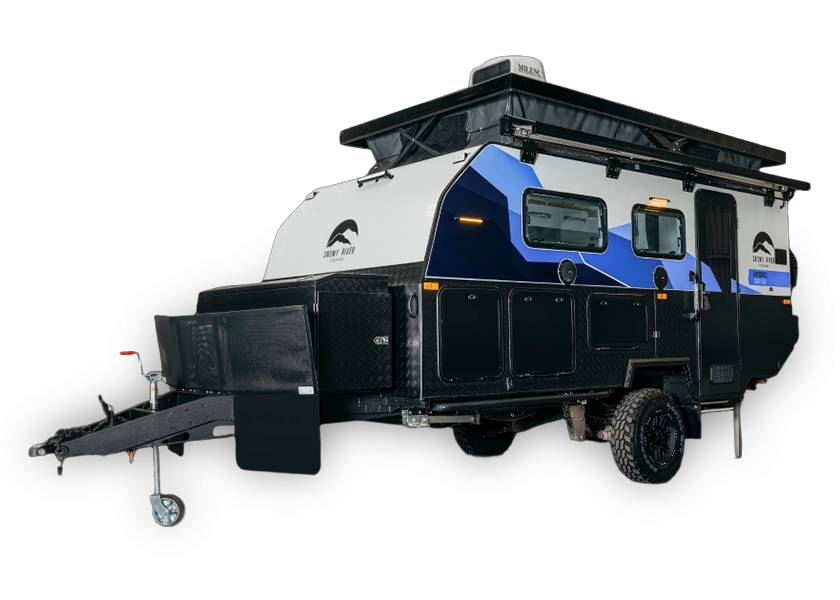
New Gonow SRH16
Travel trailers are the best-selling RV type in North America, and for good reason. They are versatile, available in an enormous range of sizes and price points, and can be towed by a wide variety of trucks, SUVs, and even some crossovers.
Travel trailers are hitched to a standard ball mount at the rear of a tow vehicle. There is a huge range within this category: ultra-lightweight 'teardrop' trailers for minimalist campers, mid-size family units with slide-outs and full kitchens, and large luxury trailers approaching the size of a fifth wheel.
Fifth wheels are towed using a specialized hitch mounted in the bed of a pickup truck — the same 'fifth wheel' coupling system used by semi-trucks. This setup allows for a bi-level floor plan with a raised front section that sits above the truck bed, creating the most usable interior space of any towable RV.
The raised front section of a fifth wheel typically houses the master bedroom, creating a genuine sense of separation between the sleeping area and the living space below. Multiple slide-outs can expand an already generous floor plan to impressive proportions.
Truck campers are a unique category: a self-contained living unit that slides into and mounts onto the bed of a pickup truck. They are the most compact and trail-capable form of RV available.
Truck campers are popular among hunters, anglers, and backcountry adventurers because the host truck retains its 4WD capability. A truck camper can go nearly anywhere the truck can — up forest service roads, across river fords, into locations that would be inaccessible to any trailer or motorhome.
| RV Type | Length | Best For | Requires Tow Vehicle? |
| Class A | 25–45 ft | Full-time living, luxury travel | No |
| Class B | 16–24 ft | Solo / couples, stealth camping | No |
| Class C | 20–32 ft | Families, first-timers | No |
| Super C | 30–45 ft | Power + luxury seekers | No |
| Travel Trailer | 12–35 ft | Budget families | Yes |
| Fifth Wheel | 25–40 ft | Extended trips, spacious living | Yes (pickup truck) |
| Truck Camper | 8–11 ft | Off-road adventurers | Yes (truck bed) |
The price is not required, as it varies widely. Generally, Super C is the most expensive while truck campers are the opposite.
A common concern for new RV buyers is whether a standard driver's license is sufficient. The good news: in most U.S. states and Canadian provinces, a standard Class D (or equivalent) driver's license is all that is required to operate most motorized RVs, including large Class A diesel coaches.
However, there are important nuances worth noting before you hit the road:
• Some states impose weight-based restrictions. Vehicles over 26,000 lbs GVWR (Gross Vehicle Weight Rating) may require a non-commercial Class B license in certain jurisdictions.
• Full-size Super C motorhomes built on commercial semi-truck chassis may require a Commercial Driver's License (CDL) depending on the state and the vehicle's weight rating.
• Towing regulations vary significantly. Some states require separate trailer braking systems for trailers over a certain weight threshold.
• Always verify the specific licensing requirements for each state you plan to travel through, as they are not uniform across all 50 states.


