


News
New GONOW Move Freely Live Fully
New GONOW Move Freely Live Fully
For a long time, choosing a small motorhome was seen as a compromise — the option travelers settled for when a full-size model was out of budget or out of reach. That assumption no longer holds. Across the market, small motorhomes are increasingly the vehicle travelers actively want, not the one they settle for. Behind this shift is a combination of practical, financial, and lifestyle reasons that, taken together, explain why so many travelers are now choosing small on purpose.
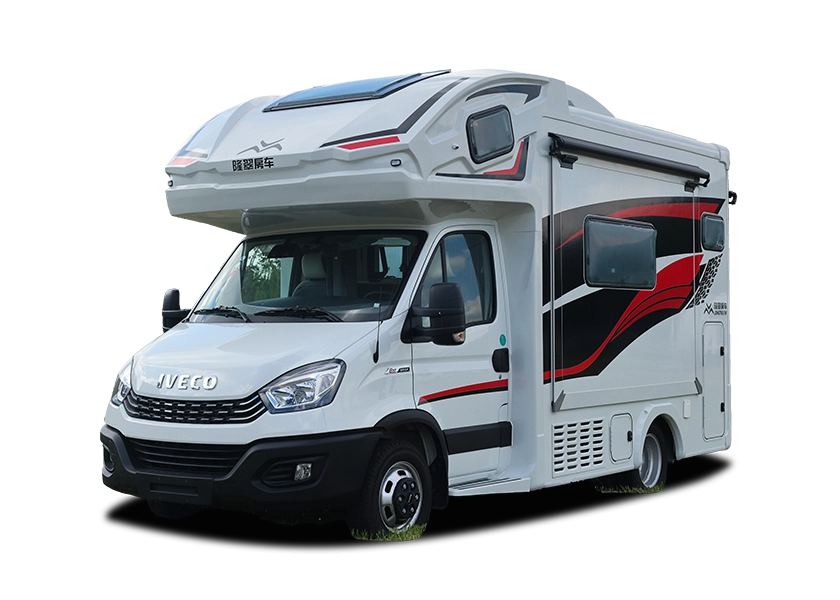
The most immediate advantage of a small motorhome is how much easier it is to live with day to day. Navigating narrow city streets, tight campground sites, or winding mountain roads is far less stressful in a compact vehicle than in a full-size rig. Parking, too, becomes dramatically simpler — small motorhomes can fit into standard parking spaces and busy lots that would be inaccessible to larger vehicles, opening up spontaneous stops that wouldn't otherwise be practical.
This ease of use also lowers the psychological barrier to entry for first-time buyers. Driving and maneuvering a large motorhome can be genuinely intimidating for someone without prior experience, and that hesitation keeps many potential buyers out of the market entirely. A smaller, more manageable vehicle removes much of that anxiety. In several markets, small motorhomes also fall under standard driver's license categories, meaning travelers don't need to pursue additional certification just to get behind the wheel — a practical advantage that meaningfully widens the pool of potential owners.
Cost plays an equally important role in this shift. The upfront purchase price of a small motorhome is typically lower than that of a larger model, which makes ownership accessible to a wider range of buyers — including younger travelers and first-time owners who might otherwise be priced out of the category altogether. That affordability continues well beyond the initial purchase.
Fuel consumption scales with size and weight, so smaller vehicles generally cost less to run trip after trip, and those savings add up meaningfully over time for frequent travelers. Maintenance and repair costs also tend to be lower, since smaller vehicles typically have less complex systems and require fewer resources to service. Even administrative costs like insurance premiums and annual registration or inspection fees are often more favorable for smaller vehicles, further reducing the total cost of ownership over the vehicle's lifetime.
Perhaps the most significant shift isn't practical or financial — it's a change in mindset. Many travelers today are moving away from the idea that bigger automatically means better, instead prioritizing space that's genuinely functional over space that simply looks impressive. A well-designed small motorhome, with a fold-away bed, a compact but complete kitchen, and smart storage throughout, can meet a traveler's real needs without any of the excess.
There's also a behavioral upside to a smaller footprint: travelers in compact motorhomes tend to spend more time outside the vehicle rather than in it, using the space primarily for sleeping and essential tasks while treating the outdoors as the true living area. Thoughtful interior design has made this trade-off easier to accept. Multi-purpose furniture, vertical storage solutions, and efficient layouts mean that a smaller vehicle doesn't have to mean sacrificing functionality — it simply means every square foot is used more intentionally.
What makes this trend particularly interesting is that no single reason explains it on its own. Some travelers are drawn to small motorhomes primarily for the driving and parking convenience, others are focused squarely on cost, and still others are making a deliberate lifestyle choice toward simplicity and time spent outdoors. In most cases, it's some combination of all three. This diversity of motivation is exactly why a flexible approach to design and manufacturing matters so much in this category — a single fixed configuration can't fully serve buyers who are arriving at the same decision from such different starting points.
The rise of small motorhomes reflects a genuine shift in what travelers value, not simply a budget-driven fallback. As more buyers choose small deliberately rather than reluctantly, the manufacturers who succeed in this space will be the ones who can adapt their designs to the specific mix of practicality, affordability, and lifestyle priorities each market and customer brings to the table.
At New GoNow, we build our small motorhome capabilities with this diversity of buyer motivation in mind, working with dealers and fleet partners to shape solutions around what their specific customers actually value. If you're looking to meet growing demand for small motorhomes in your market, we'd welcome the conversation.


