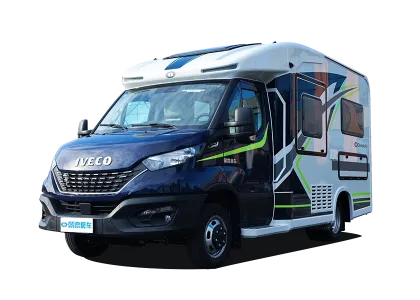
Motorized RVs are called motorhomes, too. Unlike towable RVs, motorized RVs have their own power systems and can drive independently like regular cars. They integrate the cab, power system, and living space into a single vehicle structure, serving as both a mode of transportation and a mobile home. The interior typically includes sleeping areas, a kitchen, bathroom facilities, storage space, and electrical and water systems, enabling basic or even relatively comfortable living functions.
Motorized RVs are generally categorized into 3 types: Class A, Class B, and Class C. Class A models are the largest and most luxuriously appointed; Class B models are the smallest, often converted from vans, offering the best maneuverability; Class C models fall between the 2, commonly featuring a “bunk bed” design above the driver's cab.
☛ Class B Motorized RVs ☛ Class C Motorized RVs
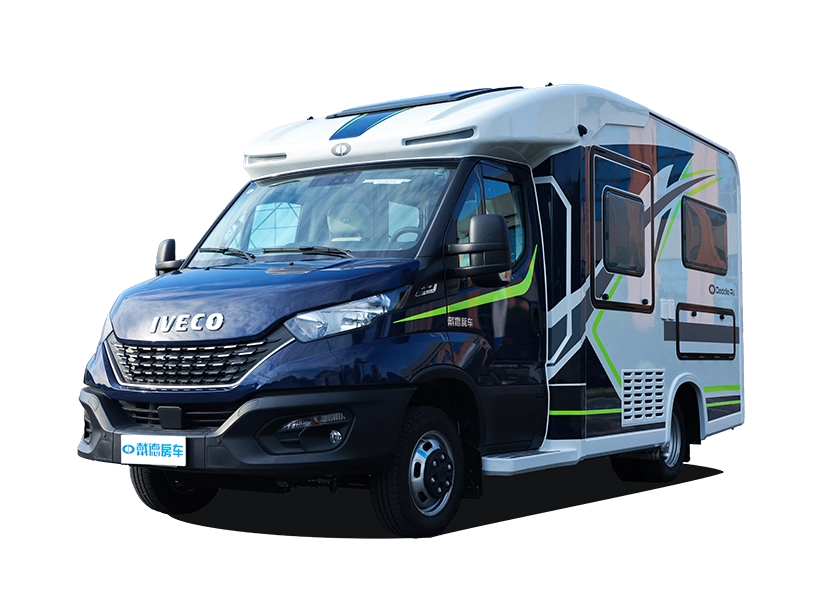
It's the most distinctive feature of motorized RVs. Equipped with their own engine and driving system, they can be driven directly like ordinary cars without requiring towing.
The integrated “drive and live” model means users don't need to purchase or match a tow vehicle, nor learn towing driving techniques.
Motorized RVs integrate the cockpit and living area within a single space. The interior typically includes sleeping areas, a kitchen or kitchenette, a bathroom with shower, a dining or lounge area, and storage cabinets.
It allows access to the living space at any time while the RV is in motion, enhancing travel convenience.
Compared to other types of RVs, motorized RVs offer remarkably simple setup procedures at campgrounds. Typically, it involves just three steps: parking, deploying stabilizers or slide-outs, and connecting utilities (if needed).
In contrast, towable RVs require hitching, unhitching, and more.
Fourth, as everyone can see, motorized RVs come in three distinct sizes. This multi-tiered structure enables motorized RVs to accommodate diverse needs—from short camping trips to extended journeys.
☛ Class B Motorized RVs ☛ Class C Motorized RVs
Electrification is emerging as a key exploration direction in the RV industry. With advancements in electric chassis, battery technology, and charging infrastructure, some manufacturers have begun developing electric motorhomes and hybrid RV platforms.
In the short term, electric motorized RVs will primarily remain small Class B or lightweight models.
Recently, demand for Class B camper vans and compact Class C motorhomes has grown significantly. Market trends indicate this is primarily driven by younger travelers entering the RV market, along with increased demand for parking and driving convenience—factors that make smaller RVs more suitable.
Consequently, compact motorized RVs are likely to become the fastest-growing segment in the future.
Motorized RVs in the future will increasingly integrate smart RV technology, such as centralized control panels, mobile app monitoring, smart energy management, and advanced driver assistance systems (ADAS).
These systems enhance energy efficiency, user convenience, and driving safety, and are gradually becoming standard features in mid-to-high-end motorhomes.
An increasing number of RV owners are embracing off-grid camping. Consequently, motorized RVs will prioritize energy independence.
Common technologies include solar panel systems, lithium battery banks, inverters, energy management systems, improved insulation, and enhanced energy efficiency. These innovations enable RVs to operate autonomously for extended periods without external power sources.
With the growing popularity of long-term RV travel and RV living, the interior design of motorized RVs is increasingly resembling residential spaces. Future RV interiors may place greater emphasis on larger kitchens, improved bathrooms, flexible sleeping arrangements and modern interior aesthetics.