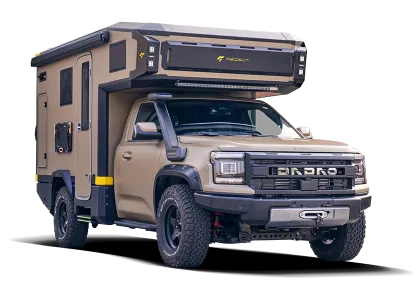
Smart technology, sleek design, and unmatched comfort — all on the open road
What makes a motorhome(campervan) "Modern"? Here are our thoughts:
Technology Traditional motorhomes offered little beyond a basic GPS and a radio. Modern motorhomes are built around integrated smart systems — touchscreen control panels, app-based monitoring for tanks and battery levels, and real-time connectivity that keeps you in control whether you're inside the vehicle or not.
Power & Energy Older models were almost entirely dependent on generators or campsite hookups, making off-grid travel impractical for most. Modern motorhomes combine solar panels, lithium battery banks and intelligent energy management systems to deliver genuine off-grid capability — often for days or weeks at a time.
Interior & Design Traditional motorhomes were functional but rarely comfortable — narrow layouts, wood panelling and basic appliances defined the experience. Today's modern motorhomes take a completely different approach, with open-plan living spaces, hotel-quality finishes and residential-grade kitchens and bathrooms that make life on the road genuinely enjoyable.
Driving & Safety Without driver assistance technology, handling a large traditional motorhome demanded real skill and confidence. Modern motorhomes come equipped with 360° cameras, blind spot sensors, lane assist and automatic emergency braking — making them significantly safer and far more approachable for a wider range of drivers.
Efficiency & Environment Traditional motorhomes were heavy, fuel-hungry and built with little regard for environmental impact. Modern motorhomes use lightweight composite materials, improved aerodynamics and more efficient engines to reduce fuel consumption considerably — with hybrid and fully electric models now beginning to enter the market.

☛ Class B Modern Motorhomes ☛ Class C Modern Motorhomes
| Who | Why |
| Families | Spacious layouts, separate sleeping areas and fully equipped kitchens mean the whole family travels comfortably — without the cost and rigidity of hotels and flights. |
| Remote Workers & Digital Nomads | Built-in WiFi, satellite connectivity and reliable off-grid power make it entirely possible to work a full day from a clifftop or forest clearing — and close the laptop to a view no office could match. |
| Retired Couples & Older Travellers | Easier to drive, more comfortable to live in and better equipped for extended trips — modern motorhomes make long-term travel a genuine lifestyle choice rather than an occasional luxury. |
| Weekend Adventurers | No bookings, no fixed itineraries — just the freedom to pack up and go whenever the opportunity arises, with all the comforts of home waiting at the end of the drive. |
Modern motorhomes typically include integrated smart GPS, app-controlled monitoring systems, solar panels, lithium battery banks, open-plan interiors, residential-grade kitchen and bathroom facilities, and advanced driver assistance technology such as 360° cameras and automatic emergency braking.
Yes, modern motorhomes are increasingly popular as a full-time living solution. With spacious layouts, reliable off-grid power, high-speed connectivity and all the essential home comforts built in, they offer a practical and flexible alternative to traditional housing, particularly for those who value freedom and the ability to change their surroundings at will.
It depends. Most modern motorhomes are designed with off-grid capability in mind. Solar panels, combined with high-capacity lithium battery banks, allow you to run appliances, heating, and lighting independently for days at a time — without needing a campsite hookup or generator.
Generally, a mid-size model in the 6 to 7-metre range is considered the most manageable. It offers enough living space for comfortable travel while remaining practical to manoeuvre in towns, car parks and campsites.
Many modern motorhomes come with solar panels either fitted as standard or available as an option. Roof-mounted solar panels work alongside lithium battery systems to capture and store energy throughout the day, powering everything from lighting and appliances to heating and device charging.
A well-maintained model can last between 15 and 25 years. Build quality, usage patterns and how regularly servicing is carried out all play a significant role in longevity.