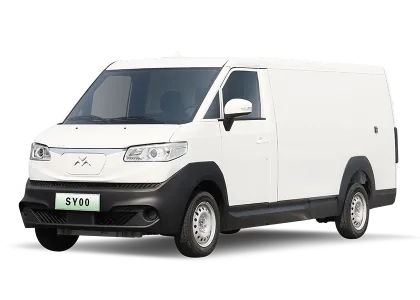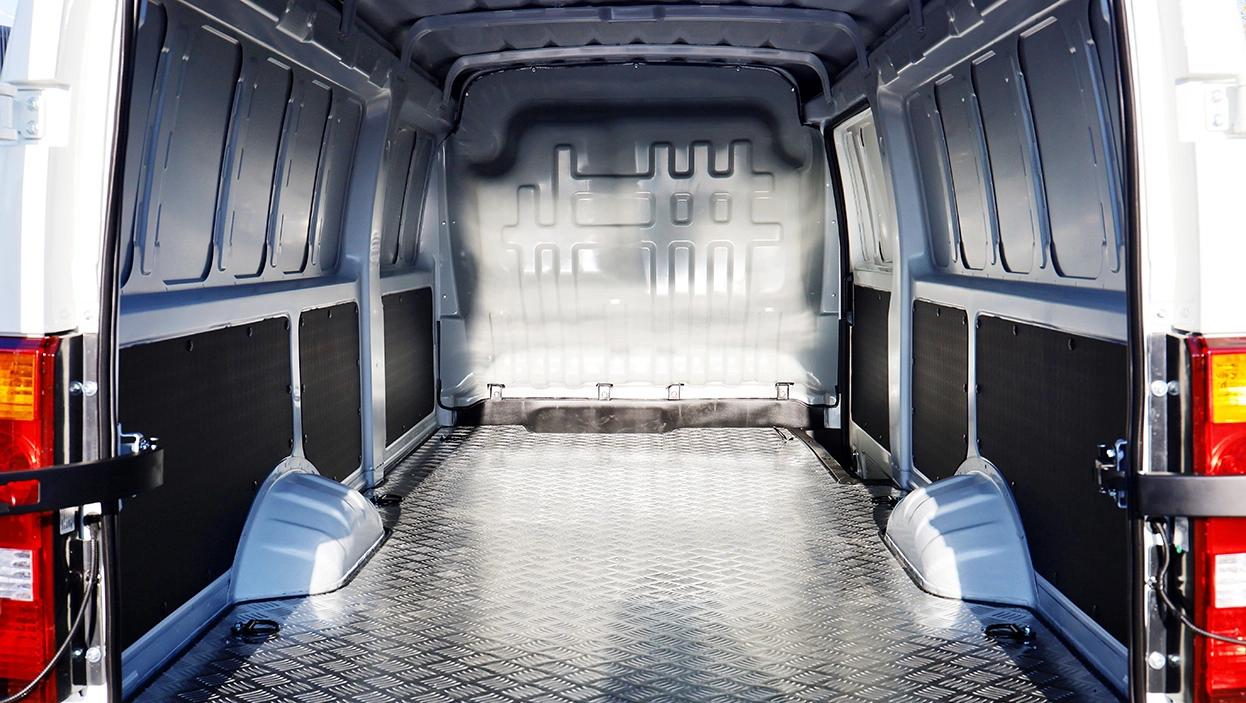
Electric cargo vans are designed with “cargo efficiency” as the core principle. The chassis employs high-strength steel or aluminum alloy construction, optimized to carry hundreds to thousands of kilograms of cargo. The floor is typically crafted as a completely flat “platform-style” structure, facilitating easy loading, unloading, and securing of goods. The battery pack is mounted beneath the chassis (a “skateboard chassis” design), lowering the vehicle's center of gravity to enhance stability under full load while preserving cargo space and maximizing payload capacity. Additionally, the thermal management system is reinforced for commercial heavy-duty applications, ensuring batteries and motors remain within controlled temperature ranges during frequent starts/stops and under heavy loads.
Electric cargo vans differ fundamentally from standard electric passenger vehicles and electric trucks. Passenger EVs prioritize comfort and range, lacking dedicated cargo compartments. While electric trucks boast exceptional load capacity, their bulky size limits urban adaptability. Electric cargo vans bridge this gap—featuring fully enclosed cargo compartments with weatherproofing and theft-deterrent capabilities. Typically carrying loads between 500 and 2000 kilograms, their compact size allows nimble navigation through urban streets. Primarily powered by commercial fast-charging infrastructure, they function as “mobile warehouses,” seamlessly integrating the payload capacity of trucks with the urban agility of passenger vehicles.
The cargo space of electric delivery vans varies by vehicle size. Small models offer a cargo volume of approximately 3 to 4.6 cubic meters with a payload capacity of 500 to 800 kilograms, suitable for light goods like express parcels and flowers. Medium-sized models feature cargo volumes ranging from 6 to 11 cubic meters with load capacities of 800 to 1,500 kilograms, serving furniture delivery, medical supplies, and fresh produce cold chain logistics. Large models offer cargo volumes exceeding 14 cubic meters and load capacities approaching 2,000 kilograms, specifically engineered for large-scale distribution by major e-commerce platforms.
Electric cargo vans ensure safe and stable heavy-load operation through multiple integrated technologies. The battery pack is positioned at the lowest point of the chassis, lowering the vehicle's center of gravity by approximately 15 to 20 centimeters compared to traditional fuel-powered vans, significantly reducing the risk of rollover during turns. Some premium models also feature air suspension or electronically controlled damping systems that automatically adjust suspension stiffness based on real-time load, ensuring the vehicle remains level whether empty or fully loaded. Simultaneously, the electric motor's millisecond-level response, integrated with the ESP vehicle stability system, enables precise torque distribution across all four wheels within an extremely short timeframe. This effectively prevents loss of control during emergency braking or cornering. The load-sensing braking system automatically adjusts braking force based on current cargo weight, completely resolving the traditional pain points of excessive braking force when empty and insufficient braking force when fully loaded.
The “last mile” represents the most costly and least efficient segment of the entire supply chain, where electric vans offer inherent comprehensive advantages. With zero tailpipe emissions and minimal noise, they can deliver goods to residential areas and commercial streets during early mornings or late nights without disturbing residents. Electricity costs amount to roughly one-third of diesel expenses, while frequent braking in urban traffic allows kinetic energy to be converted back into electricity through regenerative braking systems, further reducing operational costs. More importantly, daily last-mile delivery distances typically fall within 80 to 150 kilometers—well within the 200 to 350-kilometer range of mainstream electric vans, virtually eliminating range anxiety. Furthermore, the vehicles' built-in telematics systems enable delivery companies to track location, battery levels, and cargo status in real time, significantly boosting overall dispatch efficiency.
Urban delivery environments impose multiple stringent demands on vehicles, and electric vans demonstrate comprehensive adaptability in these areas. Their compact dimensions enable access to narrow streets, underground parking facilities, and height-restricted zones, covering core urban areas inaccessible to large trucks. As cities across Europe, China, and North America establish low-emission or zero-emission zones, electric vans enjoy unrestricted access, helping delivery companies avoid fines and traffic restrictions. Dense urban charging infrastructure, combined with high-power DC fast-charging stations built at corporate warehouses, allows vehicles to recharge overnight. This ensures they depart fully charged the next day, eliminating range anxiety.